


You’ve probably received a personal email from a Nigerian prince looking to share his wealth with you. You’ve probably seen a suspicious email from a bank you don’t belong to asking you to reset a password.
Today, Australians are actually really good at coping with these. Only about 0.5-1% of Australians exposed to these scams are victimised according to the ABS. This said, still 800,000 Aussies fall victim this and other types of personal fraud – with financial losses accumulating to approximately $1 billion. That’s an average of $1,250 per victim.
So what type of fraud could they be?
Unlike emails soliciting for your co-operating and response, there are other examples of personal fraud that require less “co-operation”. You often don’t realise you’ve been affected. The fraud is called skimming. And 48 hours ago, it was discovered that more than 40 ATMs across Sydney have been targeted for skimming.
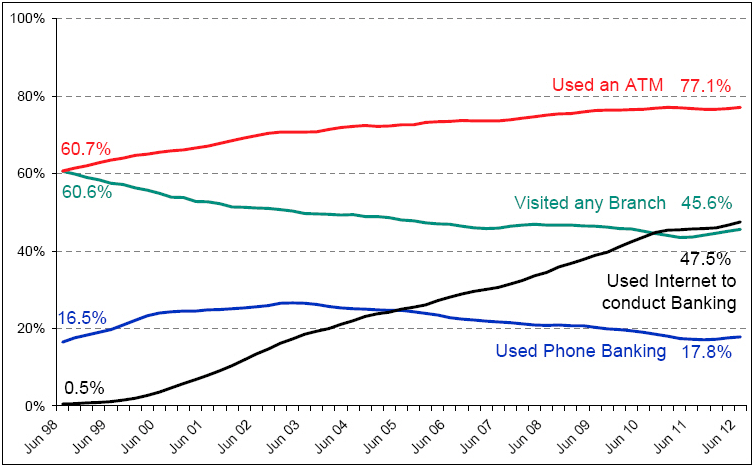
Some facts about how we bank make this highly significant, most of us prefer to use the ATM for banking than a branch:
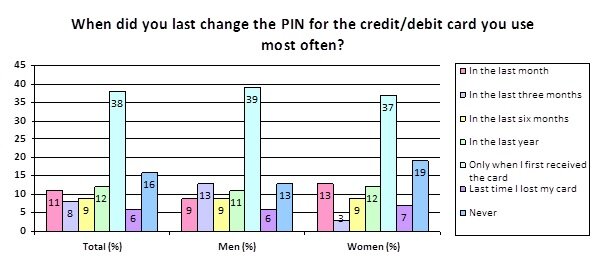
And that according to this study, many of us never change our PIN either:
How Does Skimming Work?
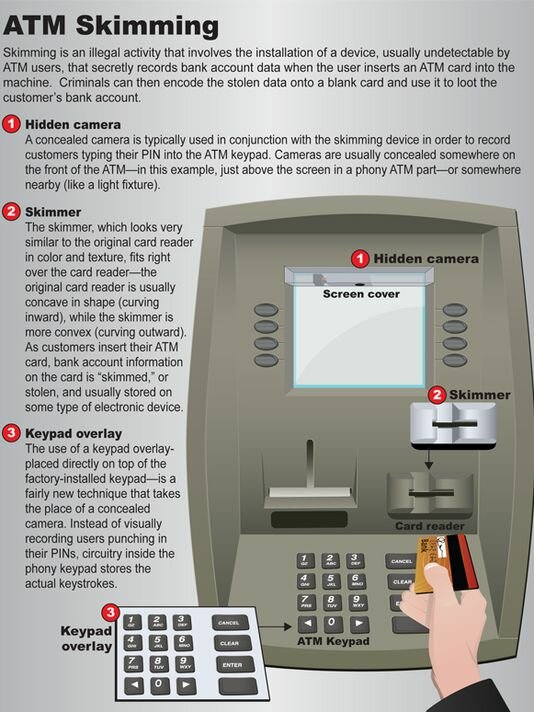
Sometimes skimmers install a device to copy information from the magnetic strip of your bank card. Other times it’s as straightforward as installing a tiny camera to record your PIN. Here’s an illustration of the whole scam:
And while ATMs get the most media attention, skimming happen in just about anywhere you use your cards: shops, restaurants, cafes – you name it.
The scammers’ technology are getting more sophisticated too.
Authorities advise ATM users to cover their hands while they enter their PIN, and while that’s still a good practice, it’s not enough. The new “keypad overlay” illustrated above would bypass the need for a camera.
So what you can do?
Here are a few things you can do:
- Cover your hands when you’re entering your PIN – it’s still good practice even if it is not always effective.
- Don’t let the cashier take your card out of your sight or swipe it with two different machines (one might be the skimming device).
- If the ATM looks like it’s tampered with, don’t use it.
- But the only real protection against skimming is this: check your bank balance and recent transactions regularly. Then immediately advise your bank should any transaction be amiss.
To do this easily across multiple banks, use our app, Pocketbook (iOS and Android here). Pocketbook automatically categorise your spending so anything extra-ordinary is easier to spot. Plus, when we detect suspicious transactions, we’ll automatically alert you.
